
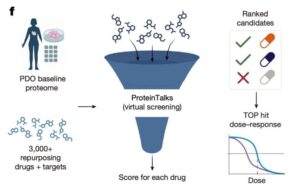
AI virtual cell uses protein dynamics to predict personalized breast cancer treatments
Not all cancer cells are the same, and neither are their responses to drugs. Finding the right drug for the right cancer cell is a long battle in drug development and in designing effective treatments. A new AI tool called ProteinTalks makes this task easier by accurately predicting whether a drug will be effective against a cancer cell line, finding new drug combinations and identifying proteins linked to drug resistance.

Lifesaving Lincoln Laboratory device wins 2026 Excellence in Technology Transfer Award
The handheld catheterization device AI-GUIDE, created by Lincoln Laboratory and Massachusetts General Hospital, promises improved health outcomes for injured service members and civilians.

LifeTech Scientific Receives CE MDR Certification for Yuranos Abdominal Aortic Stent Graft System
LifeTech Scientific, a Shenzhen, China-based developer of advanced minimally invasive medical devices for cardiovascular diseases and disorders, has received CE MDR certification for its self-developed Yuranos abdominal aortic stent graft system, which is indicated for endovascular repair of infrarenal abdominal aortic aneurysms and can be used in combination with the company’s G-iliac iliac bifurcation stent system and SilverFlow iliac artery covered stent system

Senphonix secures NSF grant for SleeveSense wearable development
The grant will assist Senphonix and the University of Arizona in their efforts to strengthen the device’s wireless components.

XCath secures FDA breakthrough designation for remote thrombectomy robot
With the FDA designate in hand, XCath will further the development of its system that is intended to broaden access to stroke treatment globally.

Nutromics’ drug monitoring patch secures FDA breakthrough designation
Breakthrough designation for Nutromics’ namesake patch applies to the wearable platform’s function in vancomycin drug monitoring.

Light-based scans can uncover hidden tissue damage in pelvic organ prolapse
Pelvic organ prolapse is a common but often overlooked condition that affects millions of women. It occurs when the tissues that support the pelvic organs weaken, allowing organs such as the bladder, uterus or rectum to shift from their normal position. Doctors can assess how severe the prolapse is, but existing tools do not provide much information about what’s happening inside the tissue itself.
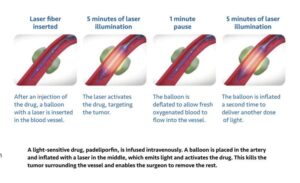
First-in-human study attacks inoperable pancreatic tumors with laser light
UCI Health, the clinical enterprise of the University of California, Irvine, is conducting a first-in-human, Phase I clinical trial using laser light to target localized but inoperable pancreatic tumors to help patients become cancer-free.