

FDA clears Marani Health’s remote maternal monitoring system
Marani’s M•wrap for foetal and and maternal heart signal monitoring is intended to give patients an at-home monitoring option versus travelling to a clinic.
Breath tests could distinguish cancerous lung nodules from benign ones
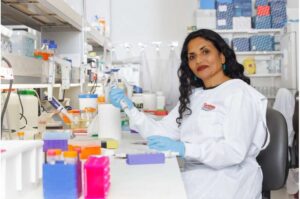
Human breath could help identify cancerous lung nodules and reduce the need for invasive testing. New Griffith University research analyzed exhaled breath to help doctors distinguish between cancerous and noncancerous lung nodules, supporting earlier lung cancer diagnosis. Approximately 2.5 million new cases of lung cancer are diagnosed each year.
Smart contact lens detects serotonin changes in tear samples collected during stress test
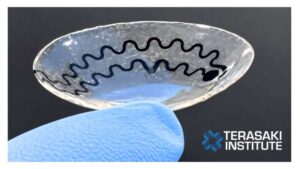
A research team led by Dr. Yangzhi Zhu, principal investigator and assistant professor at the Terasaki Institute for Biomedical Innovation, has developed a soft, reusable smart contact lens as part of its broader Ocular Library for the Analysis of Tear Biomarkers (OCULAB), a tear bioelectronics platform for noninvasive, longitudinal biochemical monitoring through the ocular surface and tear film.
New cell-collection device could improve early ovarian cancer detection
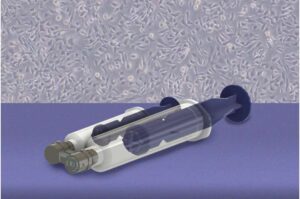
One of the main reasons ovarian cancer is among the deadliest forms of cancer is timing: When doctors catch it early, the five-year survival rate can be more than 90%. But when doctors catch it late, in stages 3 or 4, five-year survival is less than half that.
Skin-like patch takes less than a minute to apply and detects sleep apnea events in pilot tests
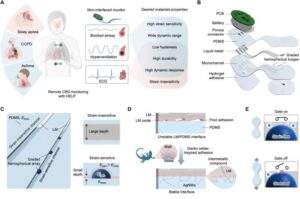
A research team led by Hnin Yin Yin Nyein, a professor in the Department of Chemical and Biological Engineering at The Hong Kong University of Science and Technology (HKUST), has developed a wearable device called “HELP” (heteromodal epidermal liquid-metal patch).
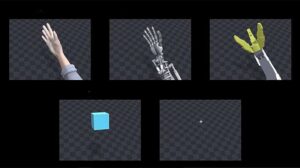
Brain-computer interface study sheds light on ‘mirror neurons’
Scientists have known for years that neural activity in the brain’s motor cortex doesn’t just happen when people perform actions. Neurons associated with actions—reaching with a hand to grasp an object, for example—also fire when a person watches someone else perform an action.
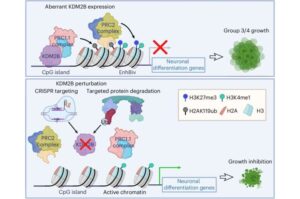
One gene helps drive growth in two childhood brain tumor groups that lack targeted therapies
Targeting KDM2B or downstream protein complexes it recruits may exploit a vulnerability in high-risk medulloblastoma subgroups that currently lack targeted therapies, according to a study led by St. Jude Children’s Research Hospital and Hopp Children’s Cancer Center Heidelberg (KiTZ).
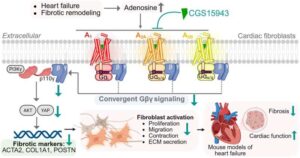
Three heart cell receptors share unexpected signal that drives scar formation
Researchers at the Stanford Cardiovascular Institute have characterized an unexpected signaling pathway that helps drive cardiac fibrosis, the buildup of scar tissue that makes the heart stiffer and less able to pump normally.