
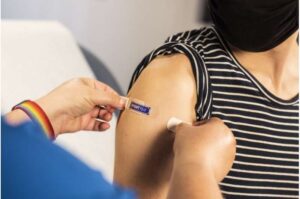
mRNA flu vaccine offers immune protection against diverse strains
A new study led by researchers at Washington University School of Medicine in St. Louis has found that an investigational mRNA influenza vaccine helps the immune system recognize a wider range of influenza viruses than today’s standard flu shot, offering stronger and potentially longer-lasting protection.

Copper drug restores memory and clears toxic Alzheimer’s proteins, preclinical study finds
Monash University researchers have found in laboratory experiments that a drug that delivers copper to the brain significantly reduces toxic Alzheimer’s proteins and improves long-term spatial memory.

Engineers find a way to deliver drugs directly to the esophagus
There are few treatment options available for people with disorders of the esophagus. Delivering drugs directly to this part of the body is difficult, so patients are usually treated with systemic drugs, which can have unwanted side effects.

Brain-like organoids reveal how Ebola persists and spreads for 120 days
Following infection, the Ebola virus can survive unnoticed in the human body for months or even years, hiding in areas with little immune surveillance like the central nervous system.
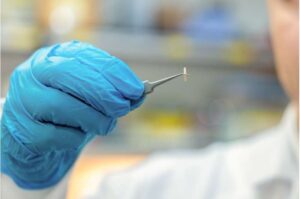
Researchers develop injectable device to control nerves without surgery
Researchers from NYU Abu Dhabi, in collaboration with Cleveland Clinic Abu Dhabi, have developed a tiny, injectable medical device that introduces a new approach to treating chronic pain and movement disorders by controlling nerve activity without the need for surgery, batteries or wires, offering a simpler and less invasive way to treat neurological conditions.

Wave Neuroscience wins FDA clearance for precision PTSD therapy
Wave’s MeRT platform records individual patient brain data to tailor transcranial magnetic stimulation (TMS) therapy for PTSD treatment.

OraSure Gains FDA Clearance for At-Home STI Sample Collection Kit
The clearance supports decentralized urine sample collection for molecular STI testing using Roche’s cobas platforms.
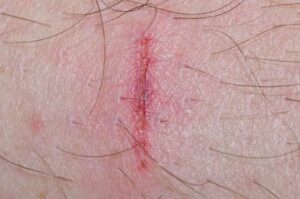
Programmable wound zipper adapts to complex skin injuries, improving healing in rats
To utilize flexible bioelectronic systems for wound healing, researchers designed the MSWZ. The MSWZ is made up of a mechanical metamaterial in a lattice structure that shrinks and responds like human skin, a reliable conductive layer, and a breathable, flexible encapsulation material.