Neurovalens earns FDA nod for neuromod for PTSD
Neurovalens announced today that it received FDA de novo approval for Modius Spero, a post-traumatic stress disorder (PTSD) therapy.

Neurovalens announced today that it received FDA de novo approval for Modius Spero, a post-traumatic stress disorder (PTSD) therapy.

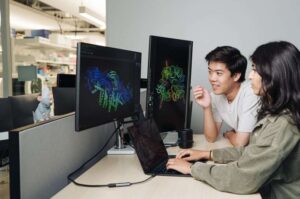
Researchers from the National University of Singapore (NUS) have developed an AI-guided workflow that combines artificial intelligence (AI) with molecular simulations to identify potential drug candidates for diabetic wound healing, identifying folic acid, a common vitamin, as a top candidate.

Detecting melanoma before it becomes visible is a major challenge in dermatology. Now, with researchers from Université de Montréal, scientists at Université du Québec’s Institut national de la recherche scientifique (INRS) have developed a promising solution.

In a study published in Nature Communications, the researchers found that the EXO1 gene is overexpressed in 20% to 30% of breast and ovarian cancers as well as in melanoma, testicular, cervical, and hepatobiliary cancers, which develop in the liver, gall bladder, and bile duct

Yanggang Feng and colleagues designed a lightweight (0.96 kg) wearable knee robot to assist isokinetic training for children with SMA type II, an intermediate form of the condition. In a clinical trial, they tested outcomes in six children (aged 6–10 years old) who could not stand from a seated position without assistance.

We were expecting the two components, the cells and the microenvironment, to evolve in lockstep. They did not,” said co-senior study author Marina Pasca di Magliano, Ph.D., Maud T. Lane Professor of Surgical Immunology and co-director of the Rogel and Blondy Center for Pancreatic Cancer at the University of Michigan.

Researchers with the James P. Allison Institute at The University of Texas MD Anderson Cancer Center have discovered a new gene expression signature within tumors that can help identify patients with metastatic castration-resistant prostate cancer (mCRPC) who are more likely to experience lasting benefits from combined immunotherapy treatment.

Researchers have identified a key protein that may help failing hearts regain function, offering new insight into why some hearts recover while others do not.

The study, conducted by researchers at Baylor College of Medicine and Texas Children’s Hospital, appeared in the American Journal of Human Genetics.

In the study, a multi-disciplinary research team led by Wyss Institute at Harvard University Founding Director Donald Ingber, M.D., Ph.D., worked with clinicians at McGill University in Canada and Massachusetts General Hospital who provided IBD and healthy tissue biopsies from the colon region of the same patients to create donor-specific microfluidic organ-on-a-chip (Organ Chip) models of colon that replicate major hallmarks of IBD in vitro in an unprecedented way.