Molecule found on cancer cell surfaces may lead to new therapies
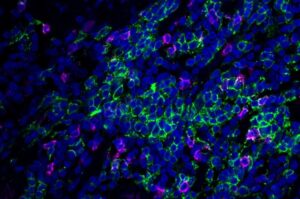
Researchers at the Federal University of São Paulo (UNIFESP) in Brazil have identified a molecule on the surface of cells that could be a promising therapeutic target against cancer.

Researchers at the Federal University of São Paulo (UNIFESP) in Brazil have identified a molecule on the surface of cells that could be a promising therapeutic target against cancer.

A new study from RCSI University of Medicine and Health Sciences demonstrates a novel approach in anticancer vaccine development. The results, published in Molecular Therapy Oncology, present the first preclinical evidence showing the efficacy of an mRNA vaccine in targeting neuroblastoma, the deadliest childhood cancer.

Now, a study published in Science Translational Medicine offers a new strategy capable of identifying chemical compounds that could be further developed into antibiotic therapies with high selectivity for N. gonorrhoeae.

Researchers at the Technical University of Munich (TUM) have developed a lab-on-a-chip system called CellTrap. It makes it possible to observe the interactions between immune cells and cancer cells at the single-cell level.

Researchers at the Medical University of Vienna have described a mechanism in metastatic colorectal cancer that has received little attention to date: A key target of existing therapies, the so-called epidermal growth factor receptor (EGFR), is likely to affect more than just the cancer cells themselves. The study shows that EGFR also influences certain immune cells in the tumor microenvironment—and thereby helps determine how effectively the body’s own defenses can combat the tumor.

The largest and longest clinical trial of its kind has found that resurfacing the kneecap during total knee replacement is likely to be the most cost-effective approach for patients and health care systems over the long term.

A study led by researchers at Children’s Hospital of Philadelphia (CHOP) demonstrates a new method of using decellularized cartilage with patient-specific cells to help enlarge pediatric airways narrowed as a result of severe subglottic stenosis.

Now, a vibrating pill could help doctors determine whether a patient with anorexia nervosa may have a higher risk of relapse, according to a new study by UCLA Health.

A new University of Otago—Ōtākou Whakaihu Waka-led study has put its own spin on Pavlov’s dog experiment, shining a light on how our brain learns new things. The study, “The superior colliculus gates dopamine responses to conditioned stimuli in visual classical conditioning” is published in Nature

A team has identified an experimental molecule capable of “reprogramming” the brain’s immune cells to restore part of their protective function against Alzheimer’s disease. The study, published in the journal Cell Death and Disease, shows that the compound, called OLE, helps microglia enclose and contain beta-amyloid plaques, reducing their size and toxicity.