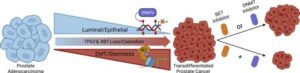
New drug combination may help treat advanced prostate cancer
About 1 in 8 men are diagnosed with prostate cancer during their lifetime. Although many survive, it can develop into metastatic disease.

About 1 in 8 men are diagnosed with prostate cancer during their lifetime. Although many survive, it can develop into metastatic disease.

Australian researchers have uncovered a promising new way to tackle one of the most aggressive forms of breast cancer, raising hopes for more effective treatments to stop the disease from spreading.

A patient with advanced, treatment-resistant lung cancer became tumor-free after treatment with the selenium compound selenite. This is shown in a new study from Karolinska University Hospital and Karolinska Institutet published in the journal Oncology and Therapy as a case report. The findings may contribute to increased knowledge about selenite as a possible cancer treatment.

Researchers explore how a key factor can mitigate or promote tuberculosis transmission.

VADUZ, Liechtenstein, Aug. 21, 2026 /PRNewswire/ — Implantica AG (publ.), a medtech company at the forefront of introducing advanced technology into the body, announced today that the U.S. Food and Drug Administration (FDA) has granted Premarket Approval (PMA) for RefluxStop®, the company’s implant-based treatment for gastroesophageal reflux disease (GERD). The approval allows Implantica to begin commercial launch activities in the United States, the world’s largest medical device market.

Memory clinics still rely on visual rating scales to assess brain atrophy, yet these tools lack the sensitivity to catch subtle changes associated with early dementia. A measure of how old a person’s brain appears on brain scans compared with their actual age might be a potential predictor of who is more likely to develop dementia over the years, reports a new study published in Neurology.

Prostate tumors can rewire amino acid metabolism to override the normal brakes on cholesterol production, a process that may fuel hormone therapy resistance, according to a study by Weill Cornell Medicine investigators.

A single application to water containers can significantly reduce yellow fever mosquito (Aedes aegypti) populations—and thus the spread of dengue fever—for many months. Researchers from the Faculty of Medicine at the University of Freiburg demonstrated this in a study published in The Lancet Infectious Diseases.
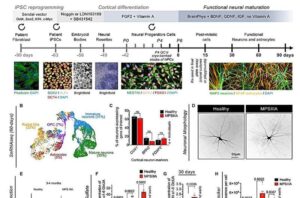
An Australian research collaboration has identified several existing TGA-approved medicines that could help slow brain damage in children with a rare form of dementia—offering hope for faster treatment options.

It’s widely understood that the microbiome—especially microbes found in the mouth and the gut—can have a profound effect on health. In a study published in the journal Cell Host & Microbe on Aug. 20, researchers report that by analyzing the makeup of oral microbes, they may be able to detect signals associated with gastric (stomach) and colorectal cancer. These findings could lead to the development of new, less invasive screening tests for gastrointestinal cancers.