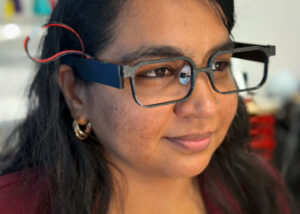
Blink-powered glasses could keep an eye on health
The ultra-low-power design could pave the way for smart glasses that continuously monitor health without constant charging.

The ultra-low-power design could pave the way for smart glasses that continuously monitor health without constant charging.
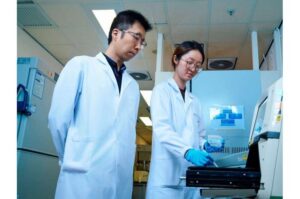
A research team led by professor Chan Kui-ming from the Department of Biomedical Sciences at CityUHK discovered that H2BE113K, a missense H2B mutation, promotes colony formation and lung metastasis in breast cancer.
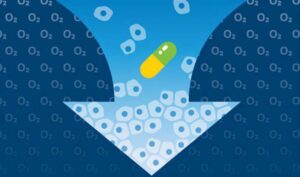
In a new study, Broad Institute researchers report that two small-molecule chemicals that reduce oxygen delivery to cells improved symptoms of neurodegeneration in a mouse model of Parkinson’s disease.
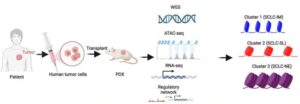
Northwestern Medicine scientists have identified a stem-like state in small-cell lung cancer that distinguishes a group of patients with exceptionally poor outcomes following chemoimmunotherapy, according to a study published in Cell Reports Medicine.
Diseases such as Alzheimer’s and frontotemporal dementia are considered neurodegenerative tauopathies, in which tau proteins in the brain misfold and lead to cognitive decline. Until now, it has been unclear how misfolded tau recruits other seemingly healthy tau and causes it to misfold and clump.
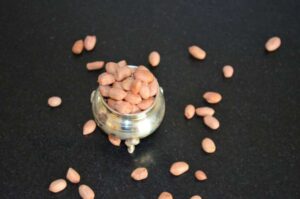
A study from the Institute of Nutrition and Translational Research in Metabolism (NUTRIM) at Maastricht University Medical Center in Maastricht, the Netherlands, has found that longer-term consumption of unsalted, skin-roasted peanuts can benefit insulin responsiveness in the brains of older adults. The findings are published in Food & Function.
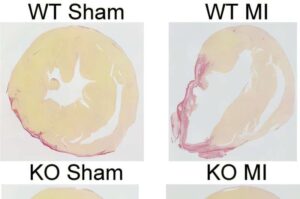
Heart failure often develops after a heart attack because excessive collagen-based scar tissue forms during repair. While collagen is necessary to reinforce scars, disease and chronic inflammation can cause overproduction, which stiffens the heart muscle and impairs its pumping ability.
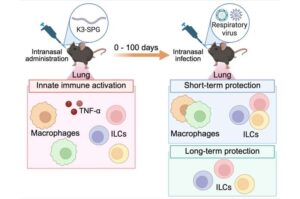
Could the body’s natural defenses be temporarily strengthened without knowing which virus will emerge?

A patch the size of a Band-Aid, stuck to your forehead, can now do something no traditional sleep study or fitness tracker can: nudge your brain toward a better night’s sleep. William Coon, a sleep scientist at the Johns Hopkins Applied Physics Laboratory, has built a wearable device, meant to be used at home, that listens to brain activity and uses neurostimulation and other techniques to manufacture deep, restorative sleep.
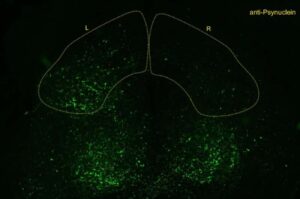
Parkinson’s disease is the second most common neurodegenerative disease. Over the last 30 years, studies have shown that a protein called alpha-synuclein abnormally aggregates in people with Parkinson’s disease, becoming toxic to neurons in a region of the brain that controls movement. This leads to tremor, rigidity and slowness of movement.