
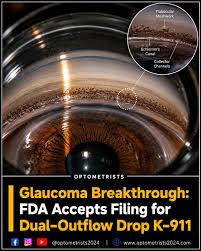
Kowa Pharmaceuticals America Announces FDA Acceptance of New Drug Application for K-911, an Investigational IOP-Lowering Eye Drop for Patients with Open-Angle Glaucoma or Ocular Hypertension
Investigational K-911 is a once-daily nitric oxide-donating bimatoprost eye drop designed to lower intraocular pressure
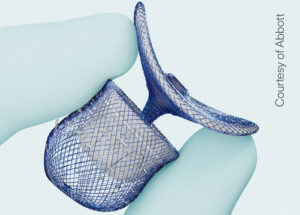
Abbott’s next-generation Amulet LAA occlusion device earns CE Mark
Abbott’s (NYSE: ABT) Amulet 360 left atrial appendage (LAA) occlusion device received CE mark, the company announced today.
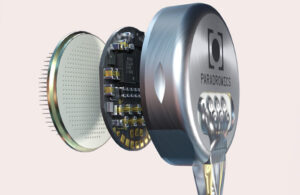
Paradromics gets FDA nod to expand BCI compatibility to personal devices
Paradromics received FDA approval to expand the types of computing devices that could be used with its investigational brain-computer interface (BCI) system, the company told MassDevice.
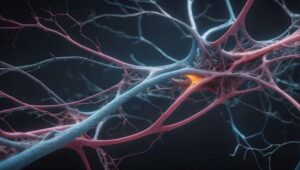
A rogue neuronal signal may lie at the root of Alzheimer’s disease
What if amyloid plaques are not the whole story of Alzheimer’s disease? New research suggests that a broad range of Alzheimer’s pathologies may be orchestrated by a molecular switch called ERBB4 when it turns on in the wrong neurons. Once activated, this misplaced signal can set off a chain reaction that disrupts brain circuits, eliminates synapses, activates glial cells, increases amyloid pathology and impairs memory.
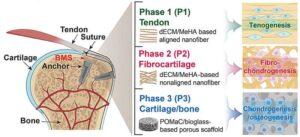
Mimicking natural connections could improve rotator cuff repair
Researchers have developed a “scaffold” that mimics natural tissue and could lead to more durable rotator cuff repairs, including for large injuries and cases involving bone and tissue degeneration that are often the most difficult to fix. Devised by a team at the Perelman School of Medicine at the University of Pennsylvania, the new system was detailed in Science Advances.
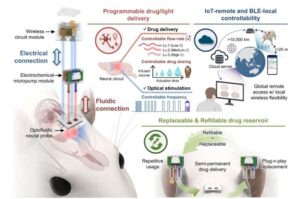
Neural implant in Korea remotely controlled from the United States
A researcher in Chicago remotely controls a miniaturized brain implant in Daejeon, Korea—over the internet. Korean researchers have developed a wireless device that can deliver drugs and light to precisely modulate targeted neurons from anywhere in the world.
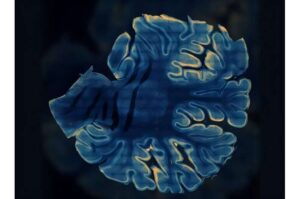
Novel molecular shuttle could expand delivery of medicines across the blood–brain barrier
The blood–brain barrier (BBB) is a protective filter that lines the brain’s blood vessels and is notoriously hard to penetrate, making the treatment of brain disorders very difficult. Strategies designed to breach the BBB include using brain surgery and focused ultrasound waves to create physical openings for the transportation of medicines and employing engineered adeno-associated viruses (AAVs) to ferry genetic payloads into desired locations, but these methods have limitations. Now, researchers at Caltech have developed a new, more effective way to transport potentially life-changing therapeutics across the BBB.
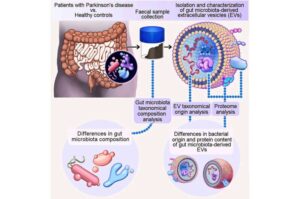
Gut bacteria may communicate differently with the human body in patients with Parkinson’s disease
A new study from the University of Oulu suggests that gut bacteria may send different biological signals in Parkinson’s disease. The findings add to growing evidence that changes in the gut could be linked to Parkinson’s disease and may eventually help researchers identify new underlying mechanisms for the condition.