
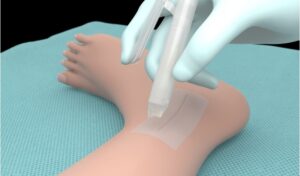
Resivant Medical Receives U.S. Patent Protecting Novel Single-Lever, Single-Handed Applicator at the Core of the Cutiva™ PLUS Skin Closure System
AKRON, Ohio, Sept. 22, 2026 /PRNewswire/ — Resivant Medical announced today that the U.S. Patent and Trademark Office has issued Patent No. 12,678,148, covering the novel single-lever, single-handed applicator design at the core of the Cutiva™ PLUS Skin Closure System. The patent protects the mechanism that allows clinicians to start, control, and stop the flow of adhesive using a single lever, without repositioning the hand or device.

Pattern Bioscience Receives FDA Breakthrough Device Designation for Urine ID/AST Panel
Pattern Bioscience, an Austin, Texas-based innovator in rapid diagnostic technologies for bacterial infections, has announced that the U.S. Food and Drug Administration (FDA) has granted Breakthrough Device Designation for its Urine ID/AST Panel. The panel is the company’s second assay to receive the designation, following the Pneumonia ID/AST Panel, reflecting Pattern’s continued focus on expanding a menu of rapid, direct-from-specimen assays.
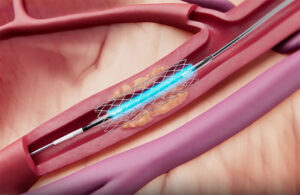
Cordis earns FDA nod for Selution SLR drug-eluting balloon
Cordis earned FDA approval for its Selution SLR (sustained limus release) drug-eluting balloon (DEB) to treat coronary in-stent restenosis, the device developer announced today.
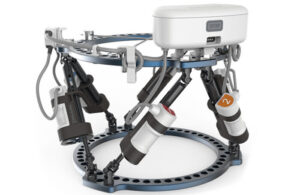
DePuy Synthes launches next-generation automated fracture fixation system
Johnson & Johnson MedTech’s DePuy Synthes Orthopaedics business launched its next-generation Maxframe Autostrut with Bluetooth Multi-Axial Correction System, the company announced today.

Portable test could help distinguish Ebola, Lassa where lab testing is limited
Cornell researchers have developed a portable diagnostic test that can simultaneously detect and distinguish Ebola and Lassa.

Blood vessel features in tumors may help predict patient survival in colorectal cancer
Tumors require a blood supply to grow and survive. The blood vessels that nourish tumors can have different characteristics across cancer types and could be connected to patient survival and outcomes. Researchers from Mass General Brigham Cancer Institute, the Broad Institute of MIT and Harvard, and Harvard T.H. Chan School of Public Health conducted a prospective cohort study using advanced imaging techniques to microscopically characterize colorectal tumor vessels.
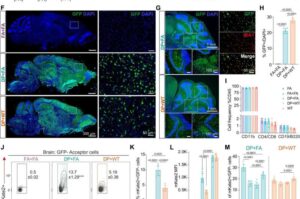
Bone marrow transplants offer surprising way to treat mitochondrial disease
Bone marrow transplants offer an unexpected way for diseased cells in the heart and brain to get replacement parts, a Stanford Medicine-led study has shown. The finding offers hope for the first effective treatment of mitochondrial disorders, a group of genetic diseases in which cells’ motors, called mitochondria, are dysfunctional.

Two protective genetic pathways may converge to reduce Alzheimer’s disease risk
Alzheimer’s disease is the most common form of dementia worldwide. Although the APOE ε4 allele is the strongest genetic risk factor for late-onset Alzheimer’s disease, not all carriers develop dementia, indicating that other genetic factors can modify disease risk. In recent years, PLCG2 has emerged as one of the most important protective genes associated with Alzheimer’s disease.